Night Shift

List of common nocturnal animals:  Skunk, Badger, Raccoon, Bat, Owl, Cat, Beaver, and Nurse.
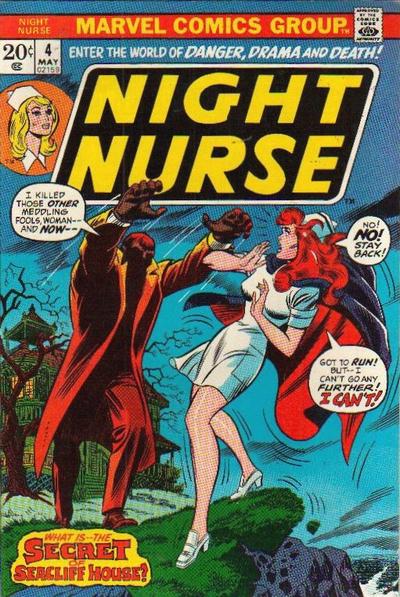
Night Nurse Vol 4 Marvel Comics

Night Nurse Vol 4 Marvel Comics

It’s true, I’ve made the list.  I’m officially a part time nocturnal creature.  I stalk the night, creeping quietly along dim lit corridors, treading lightly on wooden clogs.  My ears are alert to the sounds of my watch, my pupils the size of a Philippine Tarsiers, my blood coagulated with over brewed caffeine; these are the physical changes which signal my evolutionary adaptation that, like my fellow nocturnal brethren, give me advantages to nighttime survival.

Philippine Tarsier

Philippine Tarsier

It is not truly human to be nocturnal.  We are not born this way.  The fossil record will no doubt show how the night nurse evolved in order to circumnavigate her intrinsic circadian rhythm, and flip the switch on Mother Nature herself.

Like the grey wolf, we nurses of the night shift travel in packs; each pack leery of the other.  I belong to the ICU pack.  We’re a bit of a rough bunch, but you have to be in order to survive.  Getting through a twelve hour night shift requires certain skills not for the weak.  Our pack is smaller than the day shift, so we have to learn to do more with less, it breeds cohesiveness.

One key to survival is our food supply.  Dinner is important, but a steady supply of sugar is imperative.   4 a.m. is my breaking point.  If I don’t have a cookie and cup of coffee then there’s a good chance I might tear someone’s head off, or fall asleep at the nurses’ station.

Our risks are great working the night shift:  obesity, breast cancer, motor vehicle accidents, and excessive bitchiness.  Why?  Because we’re too fucking tired, (except for the breast cancer; I’m not quite sure what that’s all about…yet.)  Maybe our breasts are also too fucking tired, I know mine seem a little droopy by the time I get home in the morning.

Despite these risks, I carry on, skulking through the night, poking and prodding at my critically ill patients; if I’m going to have to be awake all night then so are they.

This my friends is why your loved ones are sleeping all day.

We wake their asses up every two hours to turn them, every four hours to get a temperature, every hour to check their vital signs, every two hours to check their neurological status, then there’s the pain check, pee check, poop check, skin checks, tube checks, breathing checks, and just when they look comfortable I’ll check that too.  Talk about iatrogenically induced ICU psychosis.

This is the night shift, and all for an extra $3.00/hour.  Well maybe all that extra money will help pay for my breast cancer treatments in the future.

So take care when you see us out in the daylight, like a rabid animal, you want to approach with caution.  Our cars may weave and stagger, there may be a little bit of foaming at the mouth, and a general sense of confusion on our faces.  Let us pass quietly by as we crawl into our dark dens, shutting out the light with thick paneled, black out curtains, and eye masks that read ‘do not disturb’ (and we mean it…don’t!).

When light fades to dark and the moon rises with the glowing light of a halo, it will be time for us to emerge once more, vitamin D in hand, we return to our nocturnal family where we begin yet again …the night shift!

Photo by Donna Andrews Managing Director/Bear Curator North American Bear Center

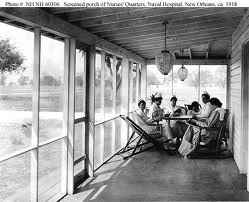
Photo by Donna Andrews Managing Director/Bear Curator North American Bear Center

 

Suicide…Nurses Who Take Their Own Lives

photo by Jean James

photo by Jean James

What drives a nurse to commit suicide?  In most cases the answer is simple; she or he has made a mistake, and usually that mistake has cost someone else their life or limb.  So why then did Jacintha Saldanha, the nurse responsible for transferring a hoax phone call to the Duchess of Cambridge’s nurse take her own life?  I’m not sure the answer is so simple here.

Jacintha Saldanha violated the British Department of Health‘s confidentiality code of disclosing information with appropriate care when she passed on an unconfirmed phone call made by two Australian D.J.’s posing as Queen Elizabeth and Prince Charles of England.  The D.J.’s, who were looking to solicit private information about the Duchess of Cambridge, decided to play a prank by placing a phony phone call to King Edward VII Hospital.  While impersonating the Queen of England and the Prince of Wales, they were easily able to deceive Nurse Saldanha into transferring them to Kate Middleton’s primary nurse, who then went on to divulge extremely sensitive medical information about the Duchess’ hyperemesis gravidarum while live on the radio.

Like all nurses who realize they made a mistake, I have no doubt Jacintha was filled with shame and embarrassment for the public spectacle that ensued after that phone call.  But was it worth taking her life?  Is any mistake worth taking your life?

The medical profession has one of the highest suicide rates.  The pressure to ‘Do no harm’ sits heavy on the shoulders of all who take that oath.  But what comes after ‘if harm is done’?  How do we counsel the person who may have made the mistake?  I know in America the answer is always the same, “You better get yourself a good lawyer!”  Then you’re dropped off at the edge of a steep cliff and left to fend for yourself.  Nurse Saldanha must have been dangling  precariously off the edge of that cliff.

According to news reports she did not share her mistake with her husband or two children.  I can only imagine the torture she put herself through.  You see, as a nurse, you don’t need to kill someone, or maim them, to feel you have done harm.  I’m guessing Nurse Saldanha felt betraying the Duchess’ privacy was harm enough.  Nurses are their own worst enemies  first.  What punitive damages come later could never possibly equate.

When a nurse or medical professional makes a mistake, immediate counseling and crisis intervention should be provided.  Nurses should not have to bury themselves in grief, fear, and shame.  No one wants to make a mistake.  Nurses work hard, are given heavy assignments, work long hours, are understaffed, expected to stay late, skip lunch, and rarely make it to the bathroom, all for the sake of caring for their patients.  We cater to abusive family members at times, abusive medical staff at times, abusive administrators at times and even abusive patients, and all the while we are expected to keep a smile on our face, and behave like ‘good girls’.

My heart breaks for Nurse Saldanha and her family.  Though I don’t know her professionally or personally, the reports I have read shed light on the kind of exemplary nurse, wife, mother and human being she was.  I’m saddened that her mistake and the insurmountable pressure that followed led her to take her own life.

Prime Minister David Cameron was quoted as saying, “There will be many lessons that need to be learned.”  This is true, but the one main lesson that needs to be learned is what drives a nurse to commit suicide, and how can we prevent this from ever happening again?

Friday Funnies: Calling All Nurses!

U.S. Nurses playing cards, reading, and relaxing circa 1918.  U.S. Navy History and Heritage Command Photo.

U.S. Nurses playing cards, reading, and relaxing circa 1918. U.S. Navy History and Heritage Command Photo.


Something magical happens when nurses get together to share stories so funny they make us pee in our pants, double over in stitches, and send tears streaming down our face, as we release the tension of caring for some pretty f’d-up patients.  I have experienced this kind of laughter over the years and it’s like a great orgasm: deep, rich, and leaving you wanting more.

With that said, I would like to invite my fellow nurse readers (if I have any) to submit your funniest story, or one you’ve heard and think is worthy of retelling.  Each and every Friday I would like to post these stories to the ‘Friday Funnies’.  You can publish your story under your own name, your nom de plume, or remain anonymous. I’ll fill in my own stories if I don’t have any friday guest authors.

The only thing I ask is that you abide by the HIPPA laws, and use your artistic license to change any part of your story that might identify someone.

You can send your submissions to jeanjames@nightingalechronicles.com

Happy story telling!

Letting Go

courtesy of Asli Kutluay at aslikutluay.com

Florence Nightingale. Courtesy of Asli Kutluay at aslikutluay.com

As a critical care nurse I have had the unfortunate experience of taking care of what I tend to call ‘living corpses’.  Simply put, this is a human being, who if not for a ventilator, an intra-aortic balloon pump, a dialysis machine, at least three IV drips to maintain a blood pressure, and no hope for recovery, would not be alive.  Time and again I’m amazed at the ability of family to keep their loved one alive despite the obvious fact that the person they love and care for is nothing more than a shell of who they were.

I’m sure this sounds cruel to people who don’t work in the medical field, and familiar to those that do.  When a patient is deemed terminal the family is often the last to accept it.  (The 5 stages of grief.)  Most families eventually come around and do what’s best for their loved one, but there are those families that will never let go, and I find this disturbing.

It’s these families that would rather keep their loved ones dependent on artificial life support until the very end whether it be out of ignorance or religious belief.  I’m fascinated by the idea of people who quote religion for not removing life support as if they’re going against Gods will; however, isn’t trying to cheat death doing just that?  The term ‘artificial life’ gives rise to its unnatural state of being.

I thought my father might be one of those people, who for religious reasons, had trouble with the idea of removing life support from the terminally ill.  He seemed steadfast in his position, but lacked any clinical observations to support his opinions.  When my father was faced with his own mortality three years ago, it was I who sat down with him as his stage IV lung cancer was rapidly ravaging his body and explained to him his options.  Sadly there were only two: 1.) End up on a ventilator and die anyway, or 2.) Make himself a D.N.R. (Do Not Resuscitate) and die a more peaceful death.

My dad was a very intelligent man, and still had his faculties enough to know he did not want to die with a tube shoved down his throat, connected to a machine, devoid of dignity and privacy in his final moments.

He chose option 2.

My relief was palpable, and after twelve harrowing weeks, when it came time for my father to take his final breath he did so on his own terms, surrounded by his family, comforted by a morphine drip; and as he let go of this world and slipped into the next, I felt peace.

Don’t jerk(off) my chain.

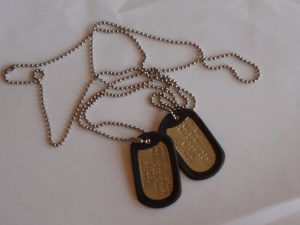
Dog Tags by Jean James

Dog Tags by Jean James

Ok, so this is a story I picked up back in my research days, when I used to travel a lot and meet other cool nurses from around the country.  Me and my partner in crime met these two really funny guys from California who told us this story one night over drinks; I laughed my ass off and I only hope I can do it justice.

Working in a veterans hospital you meet all sorts of people categorized and defined by the wars they fought.  You expect to see things like P.T.S.D. (post traumatic stress disorder), Gulf War syndrome, and a myriad of other problems brought on by years of service to this country.

Working in urology in a veterans hospital, one would expect to see the usual suspects such as: an enlarged prostate here, a little prostate cancer there, and of course a few cases of the clap.

But nothing quite prepares you for the unexpected.  While working in the urology clinic a young vet. comes in and complains to the Urologist on call, “Doc, I’m having this problem pissing.  It feels like there’s something in my dick.”  To which the doctor replies, “Are you having burning or difficulty urinating.  What does it feel like?”  Shifting from side to side, with his eyes cast down, and looking very uncomfortable, the young guy replies, “…well it kinda feels like there’s a chain in my dick.”

Holding a steady poker face, the doctor asks him what a chain in the dick feels like, then proceeds to ask him if there might be something inside his penis that he should know about.  Our young friend adamantly denies having anything actually in his dick but the sensation of a chain.

So being a thorough practitioner the doctor orders a test, and low and behold, right there in X-Ray black and white there was indeed a chain in this man’s dick.  Not just any chain, mind you , but the chain to his dog tags.

Now that this man had been confronted with radiologic evidence of a confirmed chain in his dick, he was forced to confess on how it got there.

You just can’t make this shit up.

As I’m sure you have surmised, there is only one reason men stick anything inside their orifices, and that’s to make jerking off a more pleasurable experience.

The embarrassed soldier explained that he put the chain inside his dick to jerk off with, and his plan was to yank it out during ejaculation; however, that plan backfired when the chain got sucked up and stuck inside of him.

It gives a whole new meaning to jerking your chain.

After a minor chainectomy procedure, the dog tag chain was recovered, and returned intact.  Whether or not he continued to wear it…I don’t know?

The moral of the story?  Pretty obvious.  Don’t stick anything up your dick…period!

(Or your ass for that matter.)

The Patriarch

Before I even knew what the word feminist was, I was pretty sure I met all the criteria.  I grew up in a patriarchal house, that was immersed in testosterone, having five brothers.  I watched my mom do everything for my dad, and somewhere along the way I found that role uncomfortable.  My mom would never consider doing anything without my dad, and I felt women should be way more independent.  So you can imagine my shock when the one piece of advice I clearly remember getting from my dad was ‘to make sure I went to school and got a career before I got married.’

So what career choice do I go and make with his savvy piece of advice?  Nursing!  A seemingly subservient profession.  I substituted one patriarchal life for another.

This was so apparent to me when I was in nurses training for my L.P.N.  I had two old school nurse instructors who were strict and smart, supportive and tough.  The first time they took us to the hospital for our clinical rotation, I remember the gentler of the two teachers looking panic-stricken in my direction, as she charged towards me, shoved me out of the chair I was sitting in, ripped the chart out of my hand that I was perusing, and practically curtsied to the doctor who was looking for it while offering him my chair!!

Why was it more important for him to have that chair than me?  Whatever happened to ladies first?  I made a mental promise to myself that would be the last chair I would ever give up (as long as my teachers weren’t looking.)

Over the past twenty-three years I’ve managed to keep that promise for the most part.  I have met some amazing doctors over the years (mostly young) who don’t expect me to get up, but there are still those old dinosaurs who walk into the nurses station, give that authoritative look, and expect us all to jump up and say, “Yes doctor, what do you need doctor, can I suck your dick doctor?”  When they realize none of the above are ever going to happen, a dark shadow passes over their face as they long for the days gone by.

As a nurse I’ve come to a place where I’m comfortable in my own skin, never afraid to speak my mind and still never willing to give up my chair, but as a married woman with three children I find my mothers reflection hauntingly looking back at me in the mirror.  My list of domestic chores is enough to give my inner Gloria Steinem a twitch.

I continue to have my estrogen to testosterone ratio outnumbered in my current family, but unlike my mom I do get out without my husband once in a while.  I often think of the advice my dad gave me so long ago, and appreciate the career choice I made because it’s given me the flexibility to be with my children and be in the workplace at the same time.  I plan on passing this advice to my one and only daughter and hope her future battles with testosterone are played out on a more even playing field than mine were.

Uniforms

Vintage Nurse Uniform

By the time my parents could afford to send me to private school, I was entering high school.  I had no understanding of the benefits a private school had to offer, nor did I care.  I wasn’t overly enthusiastic about switching schools, and not being with my friends.  My one greatest concern with enrollment into a Catholic high school was the mandatory plaid skirt, white shirt, and black shoes, otherwise known as a uniform.

I balked at my parents, “There is no way I’m going to any school where I have to wear a uniform!”  Oddly enough, both my parents who were Catholic schooled from K-12, didn’t put up much of a fight, and I continued on my way to public high school (worrying everyday, of course, about what I was going to wear).

After school I worked my first job at McDonald’s and was forced to wear their uniform; a melanic mix of polyester, unflattering to the best of figures, and as breathable as a world trade center dust cloud.

By day I wore my school nursing uniform: a blue stripped dress, white tights and white old lady shoes.  Its crowning feature was the starched white nurse’s cap.  I looked and felt ridiculous.  That cap was a scalp hazard. If I dropped something on the floor, inevitably I would slam my head into the over bed table on the way up.  I was starting to develop nurse pattern baldness.

Over the years my nursing uniform has evolved for the better, and now I wear comfortable scrubs, black clogs, and thank God, no cap.  But as my nursing uniform has improved over time, my personal style has digressed.  Not quite twenty something anymore, yet still too young for support hose I have donned what some call the mommy uniform, others call it the over forty fatigues; I call it my transition wear: conservative, heelless, loose around the jiggly parts, and child resistant.  It camouflages everything from back fat to sticky little finger stains.

For a girl who didn’t want anything to do with a uniform all those years ago, ironically, I have spent the last twenty years of my life wearing one.

Letters From Home

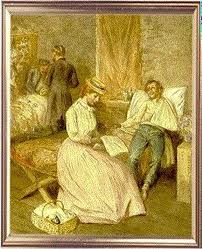
The Angels of the Battlefield by William Ludwell Sheppard     ushistory.org

The Angels of the Battlefield by William Ludwell Sheppard ushistory.org

“Dear Ganfanther,

You are so poor.  Why are you so poor?  Wade it on the peepers.  Lys to the dodders.

Love,

Your Granddaughter”

This was the letter hanging on the wall of one of my patients I cared for ten years ago.  It took me and another nurse a good hour to decipher this child’s prose. (Granted, there was a bit more to this letter then I can remember.)  I’m not sure why, but we laughed so hard at this heartfelt attempt of one granddaughters letter to her sick grandfather.

In most of our critically ill patient rooms, family would feel the need to post letters and pictures and transform what once was a sterile sick-bed, into a familiar family album.  Those bedside images have stuck with me throughout my career as memories of people I have cared for and most who didn’t make it.

These letters and pictures were nothing more than a simple gesture of hope to remind the person lying dormant in that bed that they had something to wake up for, get better for, and come home to.

A personal touch in such an impersonal place can go a long way; not just for the patient, but for everyone who enters the room and is boldly reminded that Mr. Jones is not just the guy in room 203, but he’s a grandfather with a granddaughter at home who’s worried about him.  It’s our job to keep that alive, even if we can’t keep him alive.

Translation to letter above:

Dear Grandfather,

You are so sick.  Why are you so sick?  Write it on the paper.  Listen to the doctors.

Medicine vs. Surgery

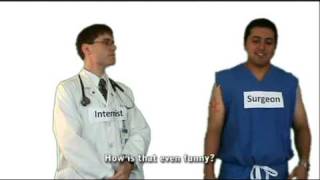
Has anybody else ever noticed the difference between medical doctors and surgeons, or is it just me?  If I had to put them in a boxing ring it would be like watching Woody Allen vs. The Rock.  Why is it that most surgeons keep themselves fit, stand tall, and exude confidence, while their medical counterparts appear a littler rounder, stand a little shorter, and secrete a schmear of smarminess?

I wonder what kind of split happens in medical school that leads one to the operating room and the other to the patient room.  Is it like high school all over again?  The jocks vs the nerds?  Or perhaps it’s more sophisticated than that, a secret initiation that we’re not privy to?

All the years I’ve been nursing I can’t help but see this glaring difference.  I know, I know, not all surgeons are hot and not all medicine men are tools.  But on the average…

When I’m in a code there’s nothing sexier than a hot surgeon in form-fitting scrubs coming to the rescue with his adept hands, slipping that central line right where it needs to be; unlike the medical doc’s 1st, 2nd, and 3rd repeated failed attempts to penetrate the right vessel.

Nobody likes sloppy attempts at penetration, NOBODY!

So, though I may be biased and a little sexist, if I had to bet on Woody Allen M.D. vs. The Rock M.D., my money clearly rests on The Rock!

Expiration Date; The Souring Aspects of Growing Old

courtesy of Asli Kutluay

Florence Nightingale courtesy of Asli Kutluay aslikutluay.com

Did you ever think you’d get to a point in your life when what you have to say doesn’t matter to anyone, anymore?   Maybe you’re already there, or know someone who is.  It’s the sad side to aging when your opinion expires, and the person on the other end of your flapping gums finds you about as relevant as spoiled milk.

I used to think that old people held such great wisdom and knowledge from all the years spent prior on this planet.  I believed in looking up to your elders, anxiously awaiting some bone of advice to nibble on and regurgitate into my own life.

But as I get older, I’m realizing that this just isn’t true.  Not all old people impart wisdom.  But for the many that do, are we listening?

As a nurse of twenty plus years, the one piece of elderly advice I have heard time and again is, “Don’t get old!”  I used to laugh at this comment and brush it aside, but at forty-one, I’m kind of starting to fear this bit of Methuselahian advice.  The physical aspects of aging are scary enough without the thought of gradually being reduced to nothing more than an amorphous cluster of denture cream, depends, and dementia.

We need to respect our youthfully challenged population, for one day we will step into their orthopedics, and it will be our coke rimmed spectacle reflection staring back at us in the mirror.

There’s usually a lesson in a story, even if you’ve heard it a thousand times.  So instead of rolling your eyes and planning your escape route, sit down, pour a cup of coffee, and listen to that old codger, because that might just be the lesson we’re all missing.

I don’t want to expire before my time.  I want to age like fine wine and have that cork popped open, instead of jammed into my doddering old pie hole.  We’re all gonna get there someday…

Just ‘Don’t get old” along the way!